
Vaginismus is among the most commonly reported causes of painful intercourse, yet most doctors spend less than 2 minutes explaining treatment options.
You know something's wrong when penetration feels impossible or painful, but you're getting vague advice and no real solutions.
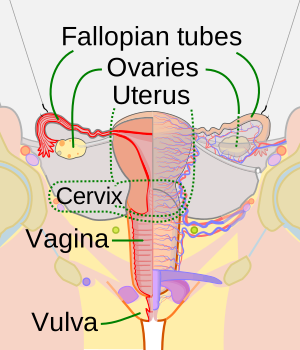
Section 01What Vaginismus Actually Does to Your Body
Vaginismus triggers involuntary contractions of the pelvic floor muscles surrounding your vaginal entrance. These contractions happen automatically when you anticipate penetration - whether it's a tampon, finger, or penis. Your body essentially creates a protective barrier without your conscious control.
The muscle group involved is called the bulbocavernosus muscle complex. When these muscles contract, they can make your vaginal opening feel completely closed off. Some women describe it as hitting a wall. Others feel a burning or tearing sensation when anything attempts to enter.
Primary vs Secondary Vaginismus
Primary vaginismus means you've never been able to have comfortable penetration. Secondary vaginismus develops after a period of normal sexual function - often following childbirth, infection, or trauma. Both types respond well to vaginismus treatment, but secondary cases often resolve faster since your body has previous experience with comfortable penetration.
Section 02Why Standard Medical Advice Often Fails
Most doctors recommend 'just relax' or prescribe lidocaine cream. Neither addresses the root cause. Vaginismus isn't about pain tolerance or insufficient lubrication. It's an automatic muscle response that needs systematic retraining.
The muscle contractions happen faster than conscious thought. By the time you realize penetration is happening, your pelvic floor has already tightened. This is why breathing exercises alone don't work. You need to retrain the automatic response through progressive exposure and muscle control techniques.
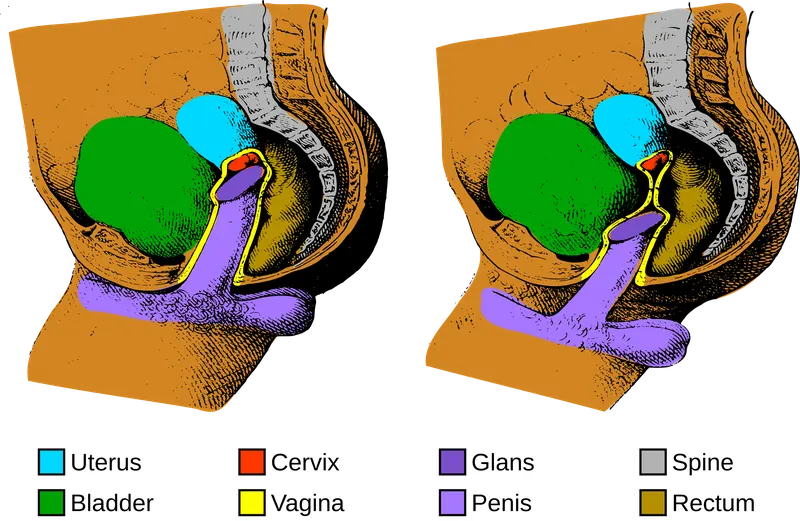
Section 03The Psychology Behind Muscle Contractions
Your brain creates associations between positions/" class="contextual-link">penetration and threat. This can happen after a painful gynecological exam, rough sexual experience, or even from anxiety about first-time penetration. Once formed, these neural pathways trigger muscle tension automatically.
Your brain creates associations between penetration and threat. This can happen after a painful gynecological exam, rough sexual experience, or even from anxiety about first-time penetration. Once formed, these neural pathways trigger muscle tension automatically.
Breaking the Fear-Tension-Pain Cycle
Fear creates muscle tension. Tension makes penetration painful. Pain reinforces the original fear. Effective vaginismus treatment interrupts this cycle at multiple points. You'll use physical techniques to control muscle tension and cognitive techniques to reduce anticipatory anxiety.
Section 04Progressive Muscle Training Techniques
Vaginal dilators work by gradually teaching your exercises/" class="contextual-link">pelvic floor muscles to stay relaxed during positions/" class="contextual-link">penetration. Think of it like physical therapy for your vaginal muscles. You start with the smallest size and progress only when you can insert and remove it comfortably.
The key is consistency, not speed. Successful vaginismus treatment happens over weeks or months, not days. Each session should feel manageable. If you're forcing anything or experiencing sharp pain, you're moving too fast and potentially reinforcing the fear response you're trying to eliminate.
Section 05Professional Treatment Options That Work
exercises/" class="contextual-link">Pelvic floor physical therapists specialize in muscle dysfunction related to sexual health. They can assess your specific muscle tension patterns and teach targeted exercises. Many women see improvement within 6-8 sessions of specialized physical therapy.
Sex therapists trained in vaginismus treatment combine cognitive behavioral techniques with graduated exposure exercises. They help you identify thought patterns that trigger muscle tension and develop coping strategies. The most effective approach combines both physical therapy and psychological support.
When to Consider Medical Intervention
Botulinum toxin injections temporarily paralyze the overactive muscles, giving you a window to practice penetration without automatic contractions. This isn't a cure, but it can help you break through plateaus when other vaginismus treatment methods have stalled. Success rates range from 70-90% when combined with ongoing therapy.
When to Stop Practicing
Sharp, stabbing pain means stop immediately. Mild stretching sensation is normal, but intense pain can worsen vaginismus by reinforcing fear responses. Always err on the side of going slower rather than pushing through discomfort.
Step-by-stepPractical Instructions
Map Your Pelvic Floor
Place one finger at your vaginal opening and gently press down toward your rectum. Squeeze your pelvic muscles like you're stopping urine flow. Feel how the muscles tighten around your finger. Now consciously relax them. This teaches you to recognize the difference between tension and relaxation in these specific muscles.
Start with External Touch
Using lubricant, touch around your vaginal opening without attempting penetration. Notice if your muscles automatically tense. When they do, pause and consciously relax them before continuing. Spend 5-10 minutes just getting comfortable with external touch while maintaining muscle relaxation.
Practice Fingertip Insertion
Insert just the tip of your well-lubricated pinky finger - about half an inch. Hold it there while consciously relaxing your pelvic floor. Don't move in and out yet. Just focus on maintaining relaxation with something inside you. Remove your finger slowly when you're ready.
Progress to Full Finger
Insert your pinky finger completely, pausing whenever you feel muscle tension. Once you can do this comfortably, move to your ring finger, then middle finger. Each size increase should feel manageable. Move your finger gently in and out once you can insert it without tension.
Introduce Vaginal Dilators
Start with the smallest dilator that feels slightly larger than what you've mastered with fingers. Insert it slowly, using plenty of lubricant. Leave it in place for 10-15 minutes while doing relaxation breathing. Gradually work up to moving it gently in and out.
Combine Movement with Relaxation
With your current dilator size, practice different angles and movements while maintaining muscle relaxation. Try gentle rotation, varied depths, and different rhythms. This teaches your muscles to stay relaxed during dynamic movement, not just static insertion.
Transition to Partner Involvement
Have your partner insert the largest dilator you're comfortable with while you guide their hand and control the pace. This bridges the gap between solo practice and partnered penetration. Focus on maintaining the same muscle control you've developed during independent practice.
Avoid theseCommon Mistakes
Forcing through pain
Pain reinforces the fear response you're trying to eliminate and can worsen muscle tension.
Skipping relaxation practice
Without conscious muscle control, you're just doing desensitization instead of retraining.
Progressing too quickly
Your muscles need time to develop new automatic responses to penetration.
Avoiding professional help
Complex cases often need specialized techniques that aren't available in self-help resources.
Inconsistent practice schedule
Irregular practice prevents your muscles from forming new automatic patterns.
"The combination of progressive muscle relaxation with systematic desensitization shows the highest success rates for vaginismus treatment, with 80-95% of women achieving comfortable penetration within 12 weeks."
Analysis of cognitive-behavioral therapy outcomes for vaginismus
FAQFrequently Asked Questions
Further ReadingRecommended Books
- The Science of Orgasm — Barry Komisaruk Neuroscience of pleasure
- Come As You Are — Emily Nagoski Research-backed sexuality
Links are affiliate links. We may earn a commission at no extra cost to you.
SourcesPeer-reviewed references
- Reissing ED, Binik YM, Khalifé S, Cohen D, Amsel R (2004) Vaginal spasm, pain, and behavior: an empirical investigation of the diagnosis of vaginismus. Archives of Sexual Behavior. doi:10.1023/B:ASEB.0000029072.16884.c1
- Melnik T, Hawton K, McGuire H (2012) Interventions for vaginismus. Cochrane Database of Systematic Reviews. doi:10.1002/14651858.CD001760.pub2
- Pacik PT (2014) Understanding and treating vaginismus: a multimodal approach. International Urogynecology Journal. doi:10.1007/s00192-014-2421-y
- Crowley T, Richardson D, Goldmeier D (2006) Recommendations for the management of vaginismus: BASHH Special Interest Group for Sexual Dysfunction. International Journal of STD & AIDS. doi:10.1258/095646206775220586
Every DOI above resolves via CrossRef. Figures quoted in this article are drawn from these papers or stated in qualified terms.
