
Nicole Daedone's Slow Sex promises 15-minute sessions that deliver more pleasure than hour-long encounters.
You're tired of rushed intimacy that leaves one or both of you unsatisfied and disconnected.
Section 01What Makes Slow Sex Different
Daedone's Slow Sex centers on a practice called Orgasmic Meditation (OM) - a 15-minute structured technique where one partner strokes the other's clitoris with specific finger pressure and rhythm. Unlike traditional foreplay, this isn't meant to lead to orgasm or intercourse. The goal is present-moment awareness and connection.
The book argues that most couples rush toward climax, missing the subtle sensations that build deeper arousal. Sarah, a reader from Portland, tried the technique with her husband after years of routine sex. She found the structured timing removed performance pressure - they both knew exactly what to expect and when it would end.
The 15-Minute Structure
Each session follows rigid timing: 2 minutes setup, 13 minutes stroking, 2 minutes sharing what you noticed. This framework eliminates the common problem of not knowing when foreplay should transition to something else.
Section 02Strengths of Daedone's Approach
The book excels at giving couples concrete instructions. Instead of vague advice about 'being present,' Daedone provides specific hand positions, pressure techniques, and psychology/sexual-communication-research/" class="contextual-link">communication scripts. You'll learn exactly where to place your finger, how much pressure to apply, and what to say when giving feedback.
Her emphasis on the receiver's experience addresses a common relationship dynamic - the partner receiving stimulation often feels pressure to respond or reciprocate immediately. The OM practice creates space for pure receiving, which many women find revolutionary after years of focusing on their partner's pleasure first.
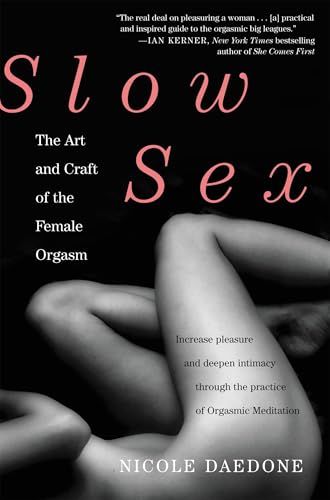
Slow Sex
Nicole Daedone's approach to orgasmic meditation and slowing down pleasure. Polarizing but influential — the ideas have spread widely for a reason.
Buy on Amazon → Affiliate link — we may earn a commissionSection 03Where the Book Falls Short
Daedone presents OM as the primary solution for intimacy problems, but many couples need variety in their physical connection. The book doesn't integrate well with other techniques - it's either OM or traditional sex, with little middle ground. Couples seeking to enhance their existing intimate practices may find this limiting.
The writing occasionally veers into spiritual territory that can feel disconnected from practical relationship needs. Terms like 'orgasmic consciousness' may resonate with some readers but could alienate couples looking for straightforward technique guidance.
Section 04Real-World Application Challenges
The book requires both partners to commit fully to the practice. Unlike other intimacy techniques you can try gradually, OM demands specific timing, positioning, and mindset from both people. This all-or-nothing approach works for some couples but creates barriers for others.
Daedone's method works best for couples who struggle with psychology/sexual-communication-research/" class="contextual-link">communication during intimacy. The structured format provides a safe container for giving and receiving feedback. However, couples who already communicate well about sex may find the rigid structure unnecessary.
Section 05Who Should Read This Book
This slow sex book review recommends Daedone's approach for couples where one partner rarely reaches satisfaction during intimacy. The focus on sustained clitoral attention without goal-oriented pressure addresses this common dynamic directly. Partners who feel disconnected during physical intimacy will also benefit from the mindfulness aspects.
Skip this book if you're looking for variety in positions, techniques, or scenarios. Daedone's method is powerful but narrow in scope. Couples wanting to explore different forms of pleasure would benefit more from broader intimacy guides that offer multiple approaches to connection.
Consent and Communication
Both partners must enthusiastically agree to try this practice. The receiver should feel completely comfortable stopping at any point. Establish clear communication about boundaries before beginning your first session.
Step-by-stepPractical Instructions
Set up your practice space
Create a comfortable area with pillows, towels, and lube within reach. The receiver lies with legs spread, the giver sits to the side. Daedone emphasizes that setup time matters - rushing this part undermines the entire practice. Remove phones and set a 15-minute timer.
Begin with noticing
The giver looks at their partner's genitals and shares one thing they notice about color, texture, or shape. This builds connection before touch begins. The receiver stays silent during this phase. This step often feels awkward initially but becomes natural with practice.
Apply the stroking technique
Use your left thumb to hold back the clitoral hood, then stroke the upper left quadrant of the clitoris with your lubricated right index finger. The stroke should be light, slow, and consistent - about one stroke per second. Maintain this exact position and rhythm for 13 minutes.
Communicate during the session
The receiver can request 'more pressure,' 'less pressure,' 'slower,' or 'faster' but should avoid lengthy explanations. The giver responds immediately to these requests. This simple communication system prevents the guessing games that often happen during intimacy.
End with sharing
When the timer ends, press your palm gently over your partner's vulva for 30 seconds, then both partners share one sensation they noticed during the practice. Keep sharing brief and descriptive rather than analytical. This integration step helps you both process the experience.
Avoid theseCommon Mistakes
Trying to make her orgasm
Defeats the purpose of mindful, goal-free intimacy
Skipping the timer
Creates uncertainty about when the session ends
Too much talking during practice
Pulls attention away from physical sensations
Expecting immediate results
Creates performance pressure and disappointment
"Structured intimacy practices like OM can help couples break out of routine patterns and develop new ways of connecting physically and emotionally."
Based on analysis of mindfulness-based intimacy techniques
FAQFrequently Asked Questions
Further ReadingRecommended Books
- Mating in Captivity — Esther Perel Desire in long-term relationships
- The New Male Sexuality — Bernie Zilbergeld Intimacy and connection
Links are affiliate links. We may earn a commission at no extra cost to you.
SourcesPeer-reviewed references
- Daedone, Nicole (2011) Slow Sex: The Art and Craft of the Female Orgasm. Grand Central Life & Style.
- Brotto, Lori A (2018) Better Sex Through Mindfulness: How Women Can Cultivate Desire. Greystone Books.
- Stephenson, Kristen R. and Kerth, Julia (2017) Effects of mindfulness-based therapies for female sexual dysfunction: A meta-analytic review. Journal of Sex Research. doi:10.1080/00224499.2016.1142496
Every DOI above resolves via CrossRef. Figures quoted in this article are drawn from these papers or stated in qualified terms.
