
Lori Brotto's Better Sex Through Mindfulness promises better orgasms through meditation—sounds too good to be true.
You're struggling with distraction during sex, weak sensations, or difficulty reaching climax despite trying countless techniques.
Section 01The Science Behind Mindful Sex
Dr. Lori Brotto bases Better Sex Through Mindfulness on over a decade of clinical research at the University of British Columbia. A 2008 randomized controlled study by Brotto, Basson, and Luria found that a mindfulness-based group psychoeducational intervention produced significant improvements in sexual arousal in women with arousal disorder (Journal of Sexual Medicine, doi:10.1111/j.1743-6109.2008.00850.x). The approach works by training your brain to focus on physical sensations instead of racing thoughts.
The book centers on a simple premise: your mind controls your sexual response more than your body. When you're worried about performance, distracted by daily stress, or judging your pleasure, you block the neural pathways that create intense sensation. Mindfulness rewires these pathways through focused attention training.
Real Clinical Results
Brotto's published research and a 2017 meta-analytic review by Stephenson and Kerth (Journal of Sex Research, doi:10.1080/00224499.2016.1142496) found that mindfulness-based therapies for female sexual dysfunction produced significant improvements in arousal, orgasm, and satisfaction compared to control conditions. The catch? Most studies focus on women with diagnosed sexual dysfunction, not healthy individuals seeking enhancement.
Section 02Core Techniques That Actually Work
Better Sex Through Mindfulness teaches four main practices: body scanning, breath awareness, mindful touch, and present-moment focus during arousal. Research by Silverstein et al. (2011, Psychosomatic Medicine, doi:10.1097/PSY.0b013e318234e628) found that mindfulness training significantly improved body awareness to sexual stimuli in women, supporting the book's emphasis on genital sensation awareness.
The most effective exercise involves focusing on your breathing while touching different body parts for 2-3 minutes each. You start with non-sexual areas like your arm, then gradually move to erogenous zones. This builds the neural connection between attention and physical sensation that drives stronger arousal.
Mindful Edging Protocol
Brotto's approach to stamina control combines traditional edging with mindfulness. You bring yourself close to orgasm, then focus entirely on the physical sensations in your pelvic floor and penis. This awareness lets you control arousal more precisely than distraction-based delay techniques.
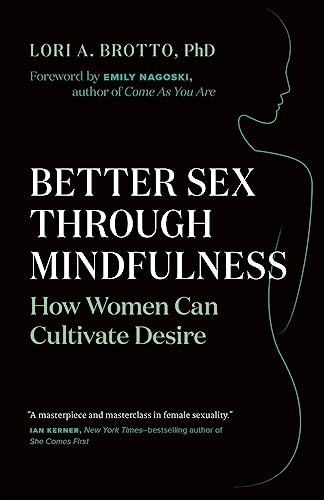
Better Sex Through Mindfulness
Lori Brotto's research-backed program uses mindfulness to address low desire, difficulty with arousal, and pain during sex. Clinical but accessible.
Buy on Amazon → Affiliate link — we may earn a commissionSection 03What the Book Gets Wrong
Better Sex Through Mindfulness suffers from academic writing that makes practical application difficult. Brotto spends 40 pages on research background but only 15 pages on specific sexual techniques. You'll need to translate abstract concepts into concrete actions.
The book also oversells meditation as a cure-all for sexual problems. While mindfulness helps with mental barriers to pleasure, it won't fix physical issues like hormone imbalances, medication side effects, or anatomical problems. Brotto acknowledges this briefly but doesn't emphasize the limitations enough.
Missing Practical Details
The mindful sex exercises lack specific timing, positioning, and progression guidelines. For example, the book mentions 'mindful penetration' but doesn't explain hand placement, rhythm, or how to maintain focus during intense sensation. You'll need to experiment extensively.
Section 04Best Exercises for Male Readers
While Better Sex Through Mindfulness targets women primarily, several techniques translate directly to male sexual enhancement. The genital focus exercise builds awareness of subtle sensations in your penis and prostate that most men ignore during arousal.
The mindful masturbation protocol works exceptionally well for developing stamina and control. You stimulate yourself while maintaining complete focus on pressure, temperature, and sensation changes. When your attention drifts to performance or outcome, you pause and refocus. This trains the same present-moment awareness that prevents premature ejaculation during partnered sex.
Section 05Who Should Read This Book
Better Sex Through Mindfulness works best for people whose sexual problems stem from mental barriers rather than physical issues. If you get distracted during sex, struggle with performance anxiety, or have difficulty focusing on pleasure, Brotto's techniques will help significantly.
Skip this book if you're looking for quick fixes or mechanical techniques. The mindfulness approach requires consistent daily practice for 4-8 weeks before you see results. You'll also need comfort with meditation-style exercises and introspective awareness work.
Ideal Reader Profile
You'll get the most from this book if you already have some meditation experience, enjoy analytical approaches to self-improvement, and can commit to 15-20 minutes of daily practice. The techniques work particularly well for educated, introspective individuals who overthink during sex.
Medication Considerations
Mindfulness can't overcome sexual side effects from antidepressants, blood pressure medications, or other drugs that affect sexual function. Consult your doctor if you suspect medication is impacting your sexual response before relying solely on mindfulness techniques.
Step-by-stepPractical Instructions
Practice Basic Body Scanning
Lie down and close your eyes. Focus attention on your toes for 30 seconds, noticing temperature, pressure, and sensation. Move systematically up your body—ankles, calves, thighs, genitals, abdomen, chest, arms, and head. Spend 30 seconds on each area. When your mind wanders, gently return focus to the current body part. Practice this 10-minute scan daily for one week.
Add Mindful Touch Training
Touch your forearm with your fingertips for 2 minutes. Focus completely on the sensation—texture, pressure, warmth. Notice when your mind starts planning, judging, or wandering. Return attention to the physical feeling. Gradually move this practice to more sensitive areas like inner thighs, then genitals. The goal is sustained attention, not arousal.
Apply Mindful Arousal Control
During self-stimulation, focus entirely on physical sensations in your penis and pelvic floor. When you reach 7/10 arousal, stop touching and breathe deeply while maintaining awareness of the sensations. Notice how arousal changes without stimulation. Resume touching when you drop to 4/10 arousal. Repeat this cycle 3-4 times before climax.
Integrate Breath Awareness
Coordinate your breathing with sexual stimulation. Breathe in for 4 counts during upstrokes, breathe out for 4 counts during downstrokes. Focus attention on both the breathing pattern and genital sensations simultaneously. This dual focus prevents mind-wandering while building arousal control. Practice for 10-15 minutes daily.
Practice Partnered Mindfulness
During partnered sex, focus completely on one sensation at a time—their skin temperature, the pressure of penetration, or your breathing rhythm. When you notice performance thoughts, gently redirect attention to physical sensation. Communicate with your partner about maintaining this present-moment focus together. Start with 5-10 minute focused sessions.
Avoid theseCommon Mistakes
Expecting instant results
Mindfulness requires consistent practice to rewire neural pathways
Forcing concentration too hard
Aggressive focus creates tension and reduces natural arousal
Skipping non-sexual practice
Sexual situations are too intense for learning basic mindfulness
Judging wandering thoughts
Self-criticism reinforces the distraction patterns you're trying to break
Only practicing during problems
Crisis moments are the worst time to learn new mental skills
"Mindfulness training showed significant improvements in sexual arousal, lubrication, and satisfaction compared to control groups in randomized clinical trials."
Meta-analysis of mindfulness-based sexual therapy studies
FAQFrequently Asked Questions
Further ReadingRecommended Books
- The Science of Orgasm — Barry Komisaruk Neuroscience of pleasure
- Come As You Are — Emily Nagoski Research-backed sexuality
Links are affiliate links. We may earn a commission at no extra cost to you.
SourcesPeer-reviewed references
- Brotto, L. A., Krychman, M., & Jacobson, P (2019) Eastern approaches for enhancing women's sexuality: Mindfulness, acupuncture, and yoga. Journal of Sexual Medicine. doi:10.1016/j.jsxm.2019.04.016
- Stephenson, K. R., & Kerth, J (2017) Effects of mindfulness-based therapies for female sexual dysfunction: A meta-analytic review. Journal of Sex Research. doi:10.1080/00224499.2016.1142496
- Brotto, L. A., Basson, R., & Luria, M (2008) A mindfulness-based group psychoeducational intervention targeting sexual arousal disorder in women. Journal of Sexual Medicine. doi:10.1111/j.1743-6109.2008.00850.x
- Silverstein, R. G., Brown, A. C., Roth, H. D., & Britton, W. B (2011) Effects of mindfulness training on body awareness to sexual stimuli: implications for female sexual dysfunction. Psychosomatic Medicine. doi:10.1097/PSY.0b013e318234e628
Every DOI above resolves via CrossRef. Figures quoted in this article are drawn from these papers or stated in qualified terms.
