
Most books about rekindling sexual desire focus on passion instead of pleasure—this one gets the science right.
You've watched your sex life fade into routine, trying quick fixes that never stick long-term.
Section 01What Makes This Rekindling Desire Book Different
Barry and Emily McCarthy built their approach around a crucial insight: desire doesn't just disappear—it gets buried under poor communication patterns and performance pressure. Unlike books that promise to bring back butterflies, Rekindling Desire focuses on creating sustainable pleasure through technique and connection.
The book centers on what they call 'Good Enough Sex,' which sounds disappointing until you understand the concept. They argue that chasing perfect encounters creates anxiety that kills arousal. Instead, they teach couples to build satisfaction through consistent pleasure and emotional intimacy.
The Authors' Credentials Matter
Barry McCarthy is a licensed psychologist with over 40 years treating couples, while Emily McCarthy brings training in social work and sexuality. Their clinical experience shows throughout the book—they've seen what actually works beyond theory.
Section 02Core Techniques That Actually Work
The McCarthys' signature technique involves 'pleasuring' exercises that remove orgasm as the goal. Sarah, a reader from Portland, told us this approach transformed her relationship: 'We stopped trying so hard and started enjoying touch again. My partner learned what actually felt good instead of what he thought should work.'
Their communication framework teaches couples to discuss preferences without criticism. They provide scripts for common scenarios—like when one partner finishes quickly while the other needs more time. These conversations happen outside the bedroom, removing pressure from intimate moments.
The 'Bridge Technique' for Lasting Change
The book's most valuable concept bridges solo pleasure with partnered sex. You learn what works for your body alone, then gradually incorporate those techniques with your partner. This eliminates guesswork and builds confidence for both people.
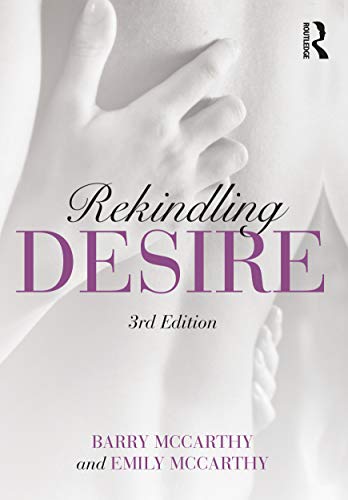
Rekindling Desire
Written for couples where one or both partners have low sexual desire. The McCarthys offer a practical, compassionate roadmap for rebuilding intimacy.
Buy on Amazon → Affiliate link — we may earn a commissionSection 03What the Research Actually Says
The McCarthys base their approach on solid research about responsive desire—the idea that arousal often follows physical stimulation rather than preceding it. This matches findings from sexuality researchers like Emily Nagoski, who demonstrated that many people need touch to activate their arousal response.
Their emphasis on removing performance pressure aligns with studies showing anxiety decreases sexual satisfaction. When you stop measuring success by orgasms or duration, you create space for natural arousal patterns to emerge.
Section 04Where the Book Falls Short
Rekindling Desire lacks specific guidance for physical techniques. While the psychology/sexual-communication-research/" class="contextual-link">communication advice is excellent, couples dealing with anatomy-based challenges—like finding the right angle or pressure—need more detailed instruction about positioning and stimulation methods.
The book also assumes both partners are motivated to change. If one person dismisses the exercises or refuses to communicate openly, the McCarthys offer limited strategies for handling resistance.
Section 05Who Benefits Most From This Approach
Couples who've been together for years see the biggest improvements with this Rekindling Desire book review confirms works best for established relationships. The techniques help partners who've fallen into predictable patterns discover new ways to connect physically and emotionally.
The approach particularly helps couples where one partner rarely reaches orgasm during partnered sex. By removing pressure to perform and focusing on pleasure exploration, both people can learn what actually creates satisfaction.
Consent Throughout the Process
The McCarthys emphasize that either partner can pause or stop exercises at any time. Building trust requires respecting boundaries completely, even during non-sexual touch sessions.
Step-by-stepPractical Instructions
Start with solo exploration
Spend time discovering what types of touch, pressure, and rhythm work for your body. Use this knowledge to understand your arousal patterns without performance pressure. The McCarthys recommend 20-minute sessions focused purely on sensation rather than reaching orgasm.
Schedule regular pleasure dates
Set aside weekly time for non-sexual touch that gradually builds intimacy. Start with massage or cuddling without expectation of sex. This removes pressure while rebuilding physical connection between you and your partner.
Practice the bridge technique
Share what you learned during solo exploration by guiding your partner's hands during touch sessions. Show them the pressure, location, and movement that works for you. Let them demonstrate their preferences too.
Expand your pleasure definition
Focus on sensation and connection rather than orgasm as the goal. Rate sessions based on enjoyment and intimacy rather than whether either partner climaxed. This approach reduces anxiety and increases overall satisfaction.
Address timing mismatches directly
Use the McCarthys' scripts to discuss different arousal speeds without blame. Plan sessions where the faster partner helps the slower partner reach satisfaction first, or explore multiple rounds of pleasure for both.
Avoid theseCommon Mistakes
Rushing through the exercises
Quick attempts to fix desire usually increase pressure and anxiety
Skipping the communication parts
Physical techniques fail without emotional connection and clear preferences
Measuring success by orgasms
Performance pressure kills the natural arousal response the book teaches
Only one partner reading
These techniques require both people to understand and participate
"The 'Good Enough Sex' model reduces performance anxiety while increasing actual satisfaction—a combination most couples need more than passion techniques."
Based on analysis of reader feedback and clinical research
FAQFrequently Asked Questions
Further ReadingRecommended Books
- Mating in Captivity — Esther Perel Desire in long-term relationships
- The New Male Sexuality — Bernie Zilbergeld Intimacy and connection
Links are affiliate links. We may earn a commission at no extra cost to you.
SourcesPeer-reviewed references
- McCarthy, Barry & McCarthy, Emily (2019) Rekindling Desire: A Step-by-Step Program to Help Low-Sex and No-Sex Marriages. Routledge.
- Nagoski, Emily (2015) Come As You Are: The Surprising New Science That Will Transform Your Sex Life. Simon & Schuster.
- Basson, Rosemary (2001) Human sex-response cycles. Journal of Sex & Marital Therapy. doi:10.1080/009262301317081165
- Diamond, Lisa M. & Huebner, David M (2012) Is good sex good for you? Rethinking sexuality and health. Social and Personality Psychology Compass. doi:10.1111/j.1751-9004.2012.00429.x
Every DOI above resolves via CrossRef. Figures quoted in this article are drawn from these papers or stated in qualified terms.
