
Research suggests that most women require clitoral stimulation rather than penetration alone to reach orgasm, yet most couples focus primarily on penetration.
You're wondering if you're missing something important when sex doesn't involve penetration, or feeling frustrated that penetrative sex isn't working for both of you.
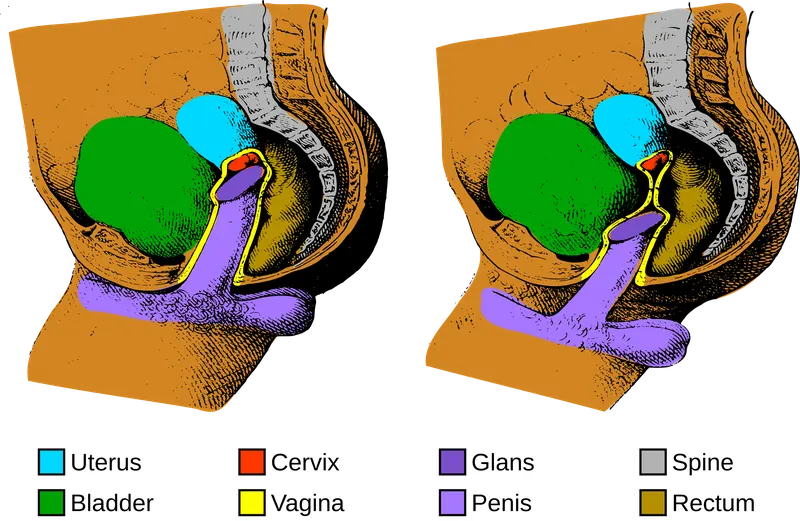
Section 01What Penetrative and Non-Penetrative Sex Actually Include
Penetrative sex involves insertion into the vagina, anus, or mouth. This includes vaginal intercourse in any position, anal sex, and oral sex when it involves penetration with fingers or toys. The key characteristic is that something enters a body opening.
Non-penetrative sex encompasses everything else that creates sexual pleasure and connection. Manual stimulation of external areas, oral contact with the clitoris or external genitals, body-to-body contact, and mutual massage all count as non-penetrative sex. Many couples don't realize how extensive this category is.
Why the Distinction Matters
Your anatomy responds differently to each type. Penetrative sex typically provides internal pressure and fullness, while non-penetrative sex focuses on the thousands of nerve endings in external areas. Combining both approaches gives you access to different types of sensation and arousal patterns.
Section 02How Each Type Affects Arousal and Orgasm
Non-penetrative sex often builds arousal more effectively because it directly stimulates the clitoris and other external areas rich in nerve endings. When Sarah and her partner struggled with her reaching orgasm during penetrative sex, they discovered that 15-20 minutes of non-penetrative stimulation first made positions/" class="contextual-link">penetration much more pleasurable for both of them.
Penetrative sex provides different sensations that many people crave - the feeling of fullness, deeper pressure, and psychological connection. The internal areas contain different types of nerve endings that respond to pressure and movement rather than light touch. Both types activate your nervous system in complementary ways.

Section 03Communication Strategies for Both Partners
Start conversations about penetrative vs non-penetrative sex outside the bedroom when you're both relaxed. You might say something like 'I've been thinking about how we could explore more variety together' rather than focusing on what isn't working during intimate moments.
Share your preferences without making it about your partner's technique. Try 'I really love when we take time with touching before positions/" class="contextual-link">penetration' instead of 'You always rush to penetration.' This frames the conversation around what you want more of rather than what's wrong.
Discussing Timing and Preferences
Ask specific questions about what your partner enjoys most. 'Do you prefer when we spend more time on non-penetrative touch?' or 'How does penetrative sex feel different for you?' These conversations help you understand each other's physical responses and build better intimacy together.
Section 04Practical Techniques for Non-Penetrative Pleasure
Focus on external stimulation using your hands, mouth, or body. The clitoris has over 8,000 nerve endings, making it incredibly responsive to different types of touch. Vary your pressure, speed, and patterns rather than staying with one repetitive motion.
Use your whole body for non-penetrative contact. Skin-to-skin contact, synchronized breathing, and full-body touching create intimacy and arousal without any positions/" class="contextual-link">penetration. Many couples find that this type of connection enhances their overall sexual satisfaction significantly.
Section 05Making Penetrative Sex More Pleasurable
Ensure adequate arousal before penetration begins. This means spending time on non-penetrative stimulation first, allowing natural lubrication to increase, and checking in with your partner about readiness. Rushing to penetration often reduces pleasure for both partners.
Experiment with angles and positions that provide external stimulation during penetration. Positions where the receiving partner can control depth and angle often work better than traditional approaches. The goal is finding what creates pleasure for both of you, not following predetermined scripts.
Section 06Combining Both Approaches Effectively
Think of penetrative and non-penetrative sex as complementary rather than competing options. Many couples find that alternating between both types during a single encounter creates more varied and satisfying experiences. You might start with non-penetrative touching, move to positions/" class="contextual-link">penetration, then return to external stimulation.
Pay attention to your partner's responses and adjust accordingly. If penetrative sex isn't creating the response you both want, switching to non-penetrative techniques isn't giving up - it's being responsive and skilled. The most satisfying intimate experiences often include both approaches.
Consent and Communication
Always check in with your partner before transitioning between penetrative and non-penetrative activities. What felt good five minutes ago might not feel good now, and ongoing consent ensures you're both comfortable and enjoying yourselves.
Step-by-stepPractical Instructions
Start with extended non-penetrative touch
Spend 15-20 minutes focusing entirely on external stimulation before any penetration. Use your hands and mouth to explore your partner's whole body, paying special attention to erogenous zones. This builds arousal and helps both of you stay present with each other's responses.
Communicate about readiness and desire
Ask your partner how they're feeling and what they want next rather than assuming penetration is the natural progression. Use phrases like 'How would you like me to touch you now?' or 'What's feeling good for you?' This keeps you connected and responsive to each other's actual desires.
Experiment with penetration angles and depth
When you do move to penetrative sex, try different positions that allow the receiving partner to control angle and depth. Positions where they can move their hips or adjust positioning help you find what creates the most pleasure. Pay attention to their responses and adjust accordingly.
Include external stimulation during penetration
Use your hands or encourage your partner to touch themselves externally while penetration is happening. This combines both types of stimulation and often leads to more intense pleasure. Many couples find this combination creates the most satisfying experiences.
Return to non-penetrative touch when needed
If penetrative sex isn't creating the response you want, smoothly transition back to external stimulation without making it seem like a failure. You might say 'I want to touch you this way' and move back to using your hands or mouth. This keeps the experience flowing and pleasurable.
Avoid theseCommon Mistakes
Treating penetration as the main event
This creates pressure and often reduces pleasure for both partners
Skipping adequate non-penetrative arousal
Penetrative sex without sufficient arousal is often uncomfortable or unsatisfying
Assuming penetration should be enough
Most women need external stimulation to reach orgasm
Making it goal-oriented rather than exploratory
Pressure to perform or reach specific outcomes reduces natural responses
"Sexual satisfaction comes from understanding that pleasure has many pathways. Both penetrative and non-penetrative sex offer unique sensations that contribute to overall intimate connection."
Based on current research on sexual satisfaction and anatomy
FAQFrequently Asked Questions
Further ReadingRecommended Books
- Mating in Captivity — Esther Perel Desire in long-term relationships
- The New Male Sexuality — Bernie Zilbergeld Intimacy and connection
Links are affiliate links. We may earn a commission at no extra cost to you.
SourcesPeer-reviewed references
- Meston, C. M., & Buss, D. M (2007) Why humans have sex. Archives of Sexual Behavior. doi:10.1007/s10508-007-9175-2
- Lloyd, E. A (2005) The case of the female orgasm: Bias in the science of evolution. Harvard University Press.
- Herbenick, D., Reece, M., Schick, V., Sanders, S. A., Dodge, B., & Fortenberry, J. D (2010) Sexual behavior in the United States: Results from a national probability sample of men and women ages 14-94. Journal of Sexual Medicine. doi:10.1111/j.1743-6109.2010.02012.x
Every DOI above resolves via CrossRef. Figures quoted in this article are drawn from these papers or stated in qualified terms.
