
The biggest difference between anal vs vaginal sex isn't physical—it's how much communication and trust each requires.
You're curious about the differences but worried about safety, comfort, or whether your partner will enjoy both experiences equally.
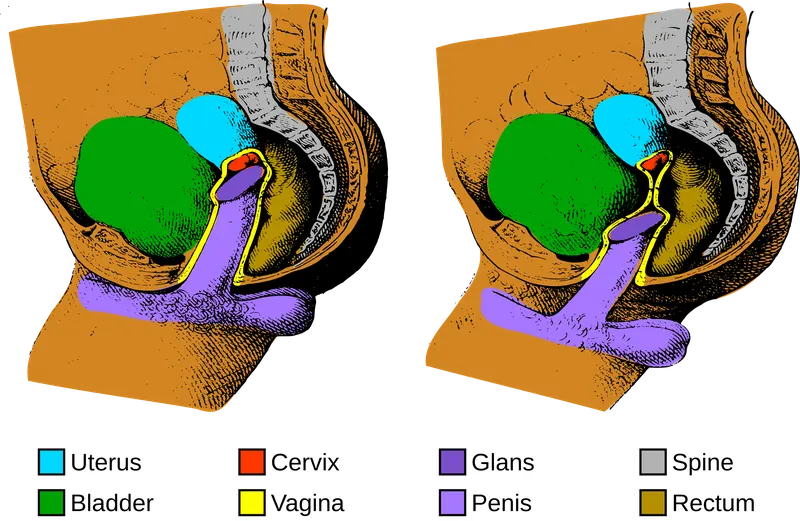
Section 01Physical Sensations and Anatomy
Vaginal sex involves penetration through naturally self-lubricating tissue designed for accommodation. The vaginal canal expands during arousal, creating space and reducing friction. The inner walls contain fewer nerve endings than the entrance, where most sensation occurs.
Anal sex involves penetration through a muscle that stays tight throughout the experience. The anal opening has dense nerve clusters, creating intense sensations for both partners. Unlike the vagina, the anus doesn't self-lubricate, requiring external lubrication for comfort and safety.
Sensation Differences for Partners
For the penetrating partner, anal sex typically feels tighter throughout due to the anal sphincter muscles. For the receiving partner, vaginal sex often builds gradually while anal sensations start intense and require more conscious relaxation to become pleasurable.
Section 02Preparation Requirements
Vaginal sex preparation focuses primarily on arousal and natural lubrication. Extended foreplay helps the vaginal canal lengthen and widen, making positions/" class="contextual-link">penetration more comfortable. Personal hygiene involves normal bathing routines.
Anal sex demands more extensive preparation. This includes using the bathroom beforehand, external cleaning, warming up with fingers or toys, and applying generous amounts of long-lasting lubricant. The receiving partner needs time to relax both mentally and physically.
Time Investment Differences
Vaginal sex can move from foreplay to penetration relatively quickly once arousal builds. Anal sex typically requires 15-30 minutes of gradual preparation for comfortable penetration, especially for beginners.
Section 03Pleasure and Orgasm Potential
Vaginal orgasms often come from indirect stimulation-complete-guide/" class="contextual-link">clitoral stimulation or G-spot pressure. Research consistently shows that most women require clitoral stimulation rather than positions/" class="contextual-link">penetration alone to reach orgasm, while others find combined stimulation most effective. The gradual build-up allows for longer sessions and multiple peaks.
Anal orgasms stem from intense nerve stimulation and can feel different from vaginal climaxes—often described as deeper and more full-body. Some women report easier anal orgasms due to the concentrated nerve endings, while others find the intensity overwhelming initially.
Combining Stimulation Types
Many couples find that adding clitoral stimulation during either anal or vaginal sex increases orgasm likelihood. The key difference: anal sex leaves hands free for external stimulation more easily than some vaginal positions.
Section 04Safety Considerations
Vaginal sex carries lower risks of tears or injuries due to natural lubrication and tissue elasticity. The main safety concerns involve preventing UTIs through proper hygiene and urinating afterward.
Anal sex requires extra safety measures due to delicate tissue that tears more easily. Never switch from anal to vaginal contact without cleaning to prevent bacterial infections. Use more lubricant than feels necessary, and stop immediately if there's pain.
When to Choose Which
Choose vaginal sex when you want longer sessions, multiple positions, or less preparation time. Consider anal sex when you're both curious, have privacy for proper preparation, and can communicate openly about comfort levels throughout.
Section 05Communication Needs
Discussing vaginal sex usually focuses on preferences, positions, and timing. Most couples can adjust during the act based on non-verbal cues and natural responses.
Anal sex conversations need to happen before, during, and after. You'll discuss boundaries, preparation methods, pacing, and comfort levels. The receiving partner must feel completely comfortable saying 'slow down,' 'more lube,' or 'stop' at any moment.
Consent Can Change
Both anal and vaginal sex require ongoing consent. Being interested initially doesn't mean you must continue if comfort changes. Check in with your partner and yourself throughout any intimate experience.
Step-by-stepPractical Instructions
Discuss boundaries and curiosity
Have a relaxed conversation outside the bedroom about what you're both curious about and any concerns. Share whether you're interested in trying both or have preferences. Establish that either partner can change their mind at any point without explanation.
Start with external exploration
Before deciding between anal vs vaginal sex, explore external touch around both areas. Use fingers with plenty of lubricant to understand how each area responds. Pay attention to which sensations your partner enjoys most.
Prepare based on your choice
For vaginal sex, focus on arousal through kissing, touching, and foreplay until natural lubrication increases. For anal exploration, use the bathroom first, clean externally, and gather high-quality lubricant and towels.
Begin with gradual stimulation
Start with external touch and single fingers before any penetration. For vaginal sex, one or two fingers help assess readiness. For anal play, begin with well-lubricated pinky finger and progress very slowly based on comfort.
Check in frequently
Ask 'how does this feel?' and 'should I continue?' regularly. Watch for non-verbal cues like tension or relaxation. With anal play, reapply lubricant frequently even if it doesn't seem necessary.
Focus on pleasure over goals
Whether you choose anal or vaginal sex, prioritize what feels good over achieving penetration or orgasm. Some sessions might stay with external play, others might progress further. Both outcomes are successful if you both enjoyed the experience.
Avoid theseCommon Mistakes
Switching without cleaning between
Moving from anal to vaginal contact spreads bacteria and causes infections
Using the same lubricant approach
Anal play requires more and longer-lasting lubrication than vaginal sex
Expecting identical pleasure patterns
Anal vs vaginal sensations build and peak differently for most people
Skipping emotional preparation
Anal sex especially requires mental relaxation and trust to feel good
Rushing through discomfort
Pain during either type creates negative associations and potential injury
"The choice between anal and vaginal sex should always prioritize communication, preparation, and mutual comfort over curiosity or pressure."
Based on sexual health research and reader feedback
FAQFrequently Asked Questions
Further ReadingRecommended Books
- Mating in Captivity — Esther Perel Desire in long-term relationships
- The New Male Sexuality — Bernie Zilbergeld Intimacy and connection
Links are affiliate links. We may earn a commission at no extra cost to you.
SourcesPeer-reviewed references
- Herbenick D, Reece M, Schick V, Sanders SA (2010) Sexual behavior in the United States: results from a national probability sample of men and women ages 14-94. Journal of Sexual Medicine. doi:10.1111/j.1743-6109.2010.02012.x
- Meston CM, Hull E, Leitzmann C,Eston M (2004) Women's orgasm. Annual Review of Sex Research. doi:10.1080/10532528.2004.10559820
- McBride KR, Fortenberry JD (2010) Heterosexual anal sexuality and anal sex behaviors: a review. Journal of Sex Research. doi:10.1080/00224490903402538
Every DOI above resolves via CrossRef. Figures quoted in this article are drawn from these papers or stated in qualified terms.
