
Dr. Jen Gunter's The Vagina Bible destroys more sexual health myths in 384 pages than most people hear debunked in a lifetime.
You've been fed decades of misinformation about vaginal health, orgasms, and sexual function from unreliable sources.
Section 01What Makes This Different
Dr. Jen Gunter brings 25 years of gynecology experience to demolish wellness industry nonsense. She targets jade eggs, vaginal steaming, and detox myths with clinical precision. The Vagina Bible reads like having a brutally honest doctor explain what actually works.
Gunter structures the book around anatomy first, then function. She explains vulvar and vaginal anatomy in chapter 2 before diving into menstruation, infections, and sexual health. This foundation prevents the confusion that derails most sexual health books.
Medical Authority That Matters
Gunter serves as director of gynecologic specialties at The Permanente Medical Group. She's published peer-reviewed research on vulvar pain and sexual dysfunction. When she calls out pseudoscience, she cites actual studies, not wellness blog opinions.
Section 02Sexual Health Coverage
The Vagina Bible dedicates four chapters to sexual health, covering arousal, orgasm mechanics, and pleasure techniques. Gunter explains clitoral anatomy with surgical precision, noting that the visible portion represents just 10% of the full structure. She describes how the clitoral complex extends internally, wrapping around the vaginal canal.
Her section on orgasm physiology stands out. She details the plateau phase, explains why some positions create better sensation, and addresses orgasm variations without judgment. Gunter acknowledges that, per Herbenick et al. (2018), only 18.4% of women reported that intercourse alone was sufficient for orgasm, with the majority requiring direct stimulation-complete-guide/" class="contextual-link">clitoral stimulation—then explains why this is normal anatomy, not a problem to fix.
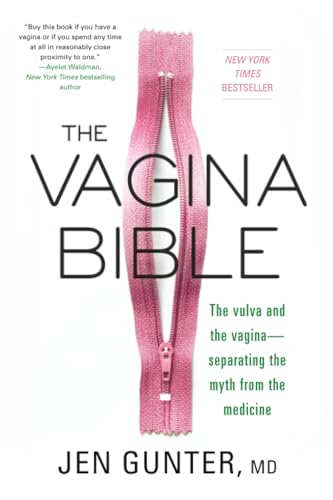
The Vagina Bible
OB/GYN Jen Gunter dismantles myths about vaginal health, debunks wellness industry claims, and provides evidence-based guidance. A NYT bestseller for good reason.
Buy on Amazon → Affiliate link — we may earn a commissionSection 03Where It Excels
Gunter excels at myth-busting with evidence. She destroys the G-spot confusion by explaining that what people call the G-spot is actually the clitoral complex felt through vaginal walls. This clarity helps readers understand their anatomy instead of searching for mysterious zones.
The book shines when addressing pain during sex. Gunter covers vaginismus, vulvodynia, and hormonal changes that affect lubrication. She provides specific treatment options and emphasizes that pain is never something to endure. Her medical background shows here—she knows these conditions intimately.
Section 04Technique Limitations
The Vagina Bible focuses heavily on medical conditions but offers limited practical pleasure guidance. Gunter explains anatomy brilliantly but doesn't translate that knowledge into specific techniques. You'll understand why certain stimulation works, but won't find step-by-step instruction for applying that knowledge.
Her approach remains clinical throughout. While this builds trust in her expertise, it creates distance from hands-on application. The book serves better as foundational knowledge than as a technique manual.
Section 05Who Benefits Most
Women dealing with chronic infections, pain during sex, or hormonal changes will find The Vagina Bible invaluable. Gunter's sections on bacterial vaginosis, yeast infections, and menopause offer evidence-based solutions that many doctors skip. She explains when to seek treatment and what questions to ask providers.
Partners seeking to understand female anatomy will benefit from Gunter's clear explanations. The book works well for couples who want scientific grounding before exploring technique-focused resources. It builds the knowledge foundation that makes other sexual health resources more effective.
Medical Information Limits
The Vagina Bible provides educational information, not personal medical advice. Persistent symptoms, pain, or infections require professional evaluation. Use Gunter's explanations to prepare questions for your healthcare provider, not replace professional consultation.
Step-by-stepPractical Instructions
Read Anatomy Chapters First
Start with chapters 1-3 covering vulvar and vaginal anatomy before jumping to sexual health sections. Gunter builds concepts progressively. Understanding basic anatomy makes her later explanations about arousal and orgasm mechanics much clearer. Skip around and you'll miss crucial context.
Cross-Reference Medical Symptoms
Use chapters 15-20 to identify any ongoing issues with infections, pain, or irregular cycles. Gunter provides specific symptoms and treatment protocols. Note her emphasis on seeking professional diagnosis rather than self-treating. Her symptom descriptions help you ask better questions during medical appointments.
Apply Arousal Insights Practically
Take Gunter's explanation of clitoral anatomy and blood flow from chapter 22 and experiment with what she describes. She explains how arousal increases sensitivity and changes anatomy temporarily. Use this knowledge to time stimulation and understand your responses better.
Integrate With Technique Resources
Combine The Vagina Bible's anatomical foundation with hands-on guides focused on pleasure techniques. Gunter gives you the why behind what works. Use her insights about clitoral structure and blood flow to understand which techniques align with your anatomy.
Avoid theseCommon Mistakes
Expecting detailed technique instruction
The book focuses on medical knowledge, not step-by-step pleasure techniques
Skipping the anatomy chapters
Later sections assume you understand basic vulvar and clitoral structure
Using it as sole sexual health resource
Clinical focus misses practical application and communication skills
Dismissing medical sections as irrelevant
Untreated infections or pain conditions sabotage sexual satisfaction
"The Vagina Bible succeeds as an evidence-based foundation for understanding female sexual anatomy, though readers need additional resources for practical technique application."
After reviewing medical accuracy and practical application
FAQFrequently Asked Questions
Further ReadingRecommended Books
- The Science of Orgasm — Barry Komisaruk Neuroscience of pleasure
- Come As You Are — Emily Nagoski Research-backed sexuality
Links are affiliate links. We may earn a commission at no extra cost to you.
SourcesPeer-reviewed references
- Gunter, Jen (2019) The Vagina Bible: The Vulva and the Vagina—Separating the Myth from the Medicine. Citadel Press.
- O'Connell, Helen E., Sanjeevan, Kalavampara V., Hutson, John M (2005) Anatomy of the clitoris. Journal of Urology. doi:10.1097/01.ju.0000173639.38898.cd
- Lloyd, Elisabeth A (2005) The Case of the Female Orgasm: Bias in the Science of Evolution. Harvard University Press.
- Meston, Cindy M., Hull, Elaine, Leitzmann, Claus,Eston, Cynthia (2004) Disorders of orgasm in women. Annual Review of Sex Research. doi:10.1080/10532528.2004.10559802
Every DOI above resolves via CrossRef. Figures quoted in this article are drawn from these papers or stated in qualified terms.
