
The Ethical Slut promises to revolutionize how you think about love, sex, and relationships beyond traditional monogamy.
You're curious about non-monogamy but don't know where to start or how to navigate multiple relationships ethically.
Section 01What Makes This Non-Monogamy Guide Different
The Ethical Slut stands out because it treats non-monogamy as a valid relationship choice, not a problem to solve. Janet Hardy and Dossie Easton write from decades of personal experience, not academic theory. They coined the term 'ethical slut' to reclaim the word and remove shame from having multiple sexual partners.
Unlike other relationship books that assume monogamy is the goal, this guide starts from the premise that jealousy isn't inevitable and exclusive relationships aren't the only path to happiness. The authors address practical concerns like scheduling dates, managing emotions, and communicating boundaries with multiple partners simultaneously.
Section 02Core Concepts and Communication Strategies
The book's strength lies in its psychology/sexual-communication-research/" class="contextual-link">communication frameworks. Hardy and Easton provide specific scripts for difficult conversations, like telling a partner you want to see other people or discussing safer sex practices with multiple partners. They emphasize that ethical non-monogamy requires more communication, not less.
The authors introduce concepts like 'compersion' (feeling joy when your partner experiences pleasure with someone else) and 'metamours' (your partner's other partners). These terms help readers navigate emotional territory that traditional relationship advice doesn't cover. The book includes exercises for identifying your own jealousy triggers and developing coping strategies.
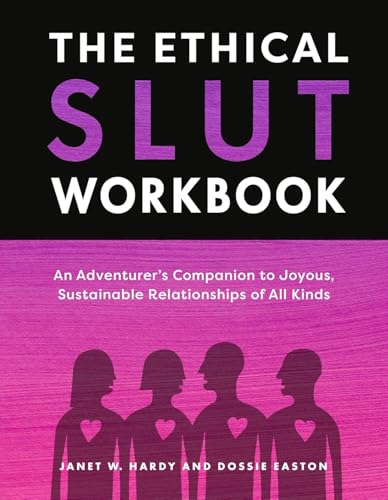
The Ethical Slut
The foundational text on ethical non-monogamy. Whether you're curious or already exploring, this book provides the framework most people are missing.
Buy on Amazon → Affiliate link — we may earn a commissionSection 03Practical Relationship Management
The Ethical Slut review reveals the book's most valuable sections focus on logistics. How do you split time between partners fairly? What happens when one relationship gets more serious than others? The authors provide templates for relationship agreements and guidelines for renegotiating boundaries as situations change.
The book addresses common scenarios like dealing with a partner's new relationship, managing sexual health with multiple partners, and maintaining friendships when romantic dynamics shift. These real-world examples make abstract concepts concrete and actionable.
Section 04Where the Book Falls Short
The Ethical Slut assumes readers have significant emotional bandwidth and psychology/sexual-communication-research/" class="contextual-link">communication skills. The authors don't adequately address how economic constraints, childcare responsibilities, or mental health challenges affect non-monogamous relationships. Their advice works best for people with flexible schedules and stable living situations.
The book also lacks nuanced discussion of power dynamics. While it mentions gender and sexual orientation, it doesn't deeply explore how racism, classism, or disability impact non-monogamous dating. The examples skew toward white, middle-class experiences, which limits the book's relevance for diverse readers.
Section 05Sexual Health and Safety Considerations
Hardy and Easton dedicate significant space to safer sex practices, STI testing protocols, and honest disclosure with partners. They provide practical guidance on having multiple sexual relationships while minimizing health risks. The book includes sample conversations about sexual history and testing results.
However, the sexual health information feels dated compared to current medical knowledge. Readers should supplement this book with updated resources from sexual health organizations for the most current guidelines on PrEP, testing windows, and treatment options.
Consent and Coercion Warning
Never pressure a partner into non-monogamy. If someone agrees reluctantly or under threat of relationship loss, that's coercion, not ethical non-monogamy. Both people must genuinely want this relationship style.
Step-by-stepPractical Instructions
Assess your motivation honestly
Before reading, identify why you're interested in non-monogamy. Are you avoiding intimacy, trying to fix relationship problems, or genuinely drawn to multiple connections? The book works best when you're exploring from curiosity rather than running from commitment issues.
Start with the communication chapters
Jump to chapters 9-11 if you want immediate practical value. These sections provide scripts for talking with current partners about opening your relationship. Practice these conversations before having them for real.
Identify your relationship agreements
Use the book's templates to create written agreements with partners about boundaries, safer sex practices, and time management. Don't assume you know what your partner wants without explicit discussion.
Practice jealousy management techniques
Work through the exercises for recognizing jealousy triggers and developing coping strategies. The authors provide specific techniques for processing difficult emotions without demanding your partner change their behavior.
Build your support network
Connect with other people practicing non-monogamy through local meetups, online communities, or therapy groups. The book emphasizes that ethical non-monogamy works better with community support rather than going it alone.
Avoid theseCommon Mistakes
Reading this to fix relationship problems
Non-monogamy amplifies existing communication and trust issues rather than solving them
Skipping the emotional preparation chapters
You'll lack tools for handling jealousy and relationship conflicts when they arise
Assuming your partner will be enthusiastic
Many people need time to process the idea and may never become interested
Using outdated sexual health information
The book's medical advice doesn't reflect current testing and prevention options
"The Ethical Slut provides valuable frameworks for communication but readers need additional resources for current sexual health information and diverse perspectives."
Based on comparison with current relationship research
FAQFrequently Asked Questions
Further ReadingRecommended Books
- Mating in Captivity — Esther Perel Desire, intimacy, and connection
- Attached — Amir Levine Attachment theory and relationships
Links are affiliate links. We may earn a commission at no extra cost to you.
SourcesPeer-reviewed references
- Hardy, Janet W., Easton, Dossie (2017) The Ethical Slut: A Practical Guide to Polyamory, Open Relationships, and Other Freedoms in Sex and Love. Ten Speed Press.
- Moors, Amy C., Matsick, Jes L., Ziegler, Amanda, Rubin, Jennifer D., Conley, Terri D (2013) Stigma toward individuals engaged in consensual non-monogamy: Robust and worthy of additional research. Analyses of Social Issues and Public Policy. doi:10.1111/asap.12020
- Conley, Terri D., Matsick, Jes L., Moors, Amy C., Ziegler, Amanda (2017) Investigation of consensually nonmonogamous relationships: Theories, methods, and new directions. Perspectives on Psychological Science. doi:10.1177/1745691616667925
- Rubel, Alicia N., Bogaert, Anthony F (2015) Consensual nonmonogamy: Psychological well-being and relationship quality correlates. Journal of Sex Research. doi:10.1080/00224499.2014.942722
Every DOI above resolves via CrossRef. Figures quoted in this article are drawn from these papers or stated in qualified terms.
